
How to Import a Custom Food Trailer From Overseas Without Port Delays
Lots of buyers reach out to us looking to cut costs by sourcing custom food trailers directly from overseas manufacturers. You can knock equipment costs down by up to 40% compared to local builders. But I’ve seen many projects stall at the port for simple reasons: incomplete paperwork or specs that don’t line up with local rules. Once your cargo gets held up, your opening timeline gets pushed back hard.There’s no fancy trick to avoid port holdups. Just work through three key phases carefully, and don’t skip any checks.
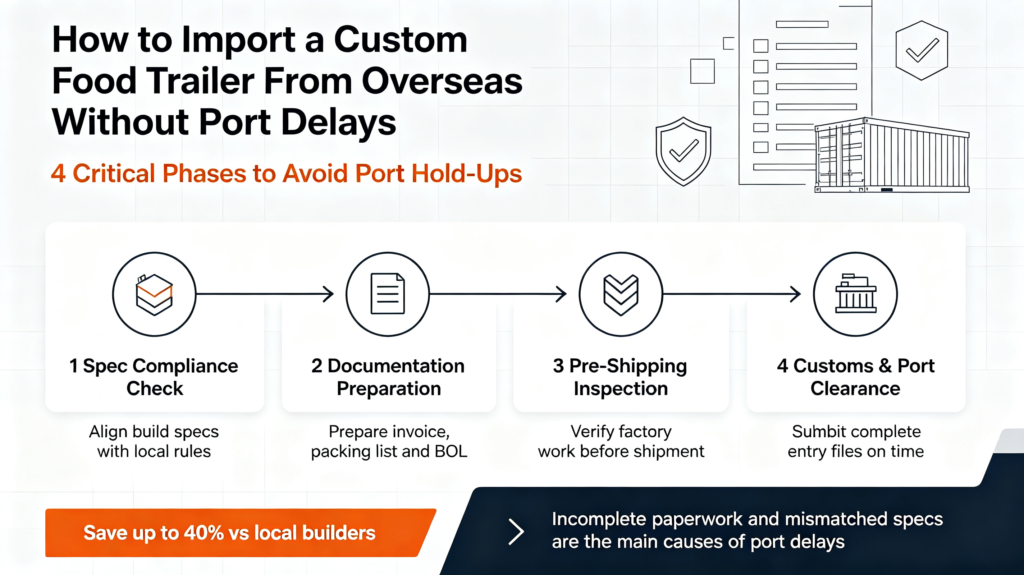
Lock in compliance before fabrication starts
Lock in compliance before fabrication starts
Don’t send any deposit until the factory confirms they can build to your local municipal and state codes. This is where most new buyers slip up.
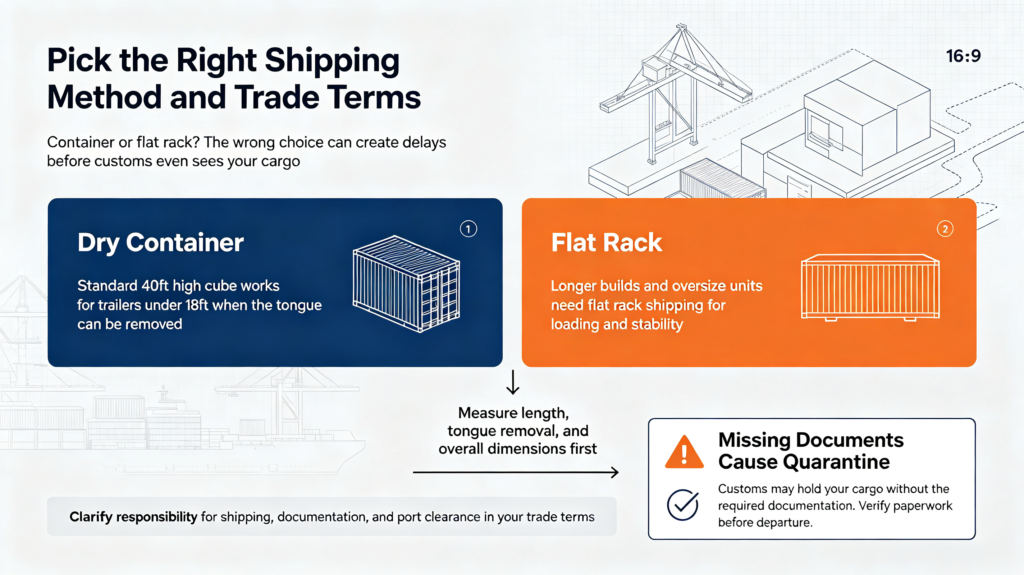
Pick the right shipping method and trade terms
Ocean freight for food trailers uses dry containers or flat racks. A standard 40ft high cube container works for trailers under 18ft, as long as you can remove the tongue. Longer builds will need flat rack shipping.
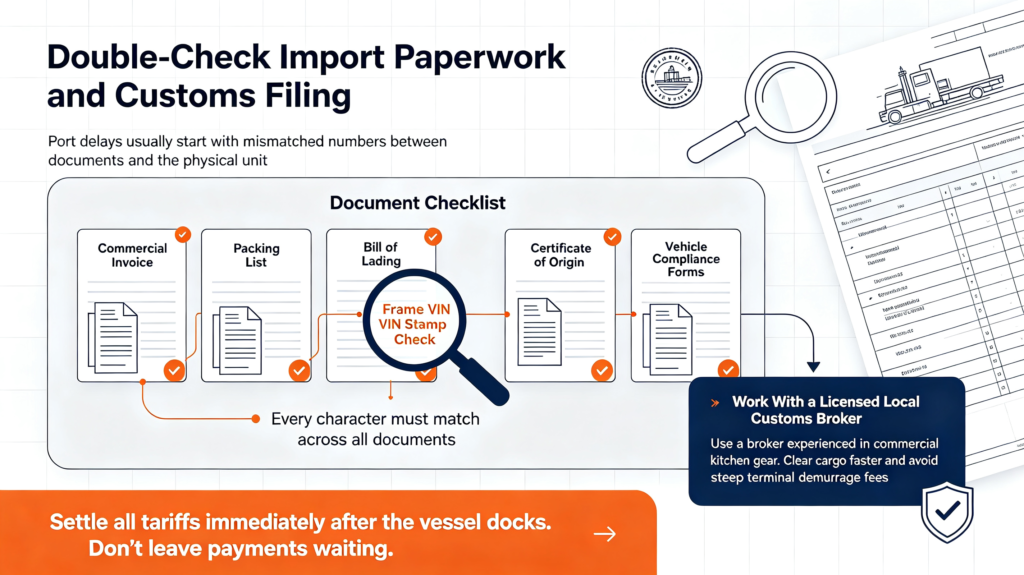
Double-check import paperwork and customs filing
Double-check import paperwork and customs filing
Port delays almost always come from mismatched numbers between documents and the physical trailer. Your broker needs the commercial invoice, packing list, bill of lading, certificate of origin and vehicle compliance forms. Go over the frame VIN stamp carefully; every character must match across all documents.
FAQ
Q1: What paperwork do I need to clear customs?
A:You’ll need bill of lading, commercial invoice, packing list, certificate of origin plus market compliance documents like DOT or NSF plumbing certificates. Siristar Factory builds trailers to full US and European export standards. We prepare all export compliance paperwork to help customs clearance run smoothly.
Q2:How many days does ocean transit take?
Q3: Will every trailer fit inside a standard shipping container?
Q4: How do I prevent unexpected port storage fines?
这是示例文本,单击 “编辑” 按钮更改此文本。